← Back to templateIndependent website preview · sample contentUse this template
SIGNALTHE LIVE EDITOR’S DESKFICTIONAL EDITORIAL DEMO
ONE STORY / REPORTING OBJECT 01ALL PEOPLE, PLACES, SOURCES, AND EVENTS ARE FICTIONAL

FICTIONAL EDITORIAL DEMOLOCAL / CIVIC

Old night market may move to a new public square

An idea is being explored in the invented town of Bellwether. The move is not confirmed, no opening date is set, and this story represents no real place or proposal.

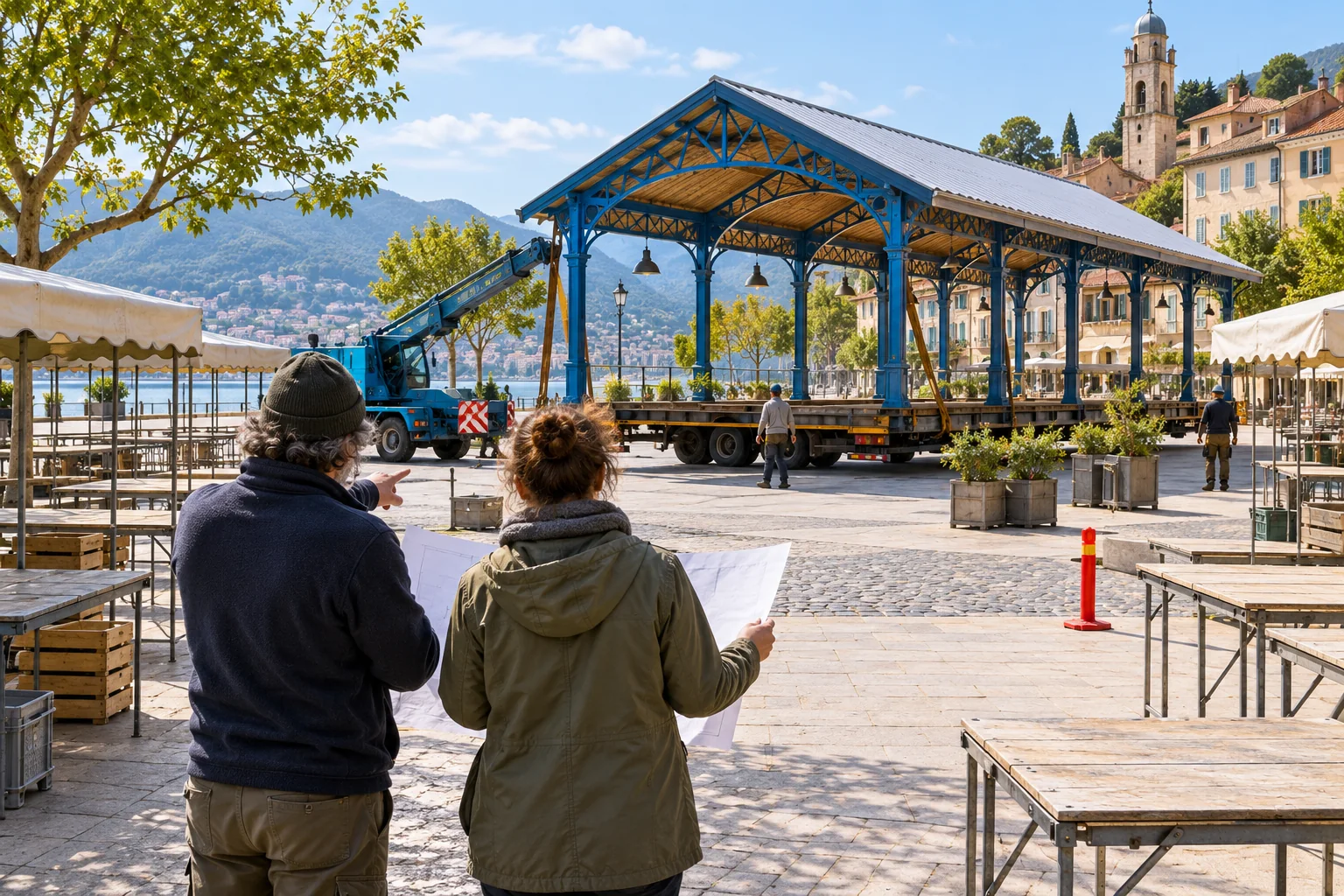
Illustrative covered market pavilion being moved in an invented town square; no real place or event is depicted and this is not evidence.ILLUSTRATIVE / GENERATED CONCEPT IMAGE
IMAGE CONTEXTCreated for this fictional editorial demo. It does not depict the fictional event, a real town, a verified location, or source evidence.SIGNAL CONCEPT / GENERATED IMAGE

In Bellwether, a fictional night-market group is considering whether its stalls could move to a new public square. The idea is still a proposal in this demo: the story does not establish approval, a deciding body, construction, or a date.

The headline gives the reader a reason to look. The summary states the narrow claim. The article puts that claim in context: an illustrative planning sketch exists inside this concept, but a sketch cannot show whether the idea has been adopted or how it would affect people who use the market.

Those details matter because “a move is being discussed” and “a move will happen” are different claims. This fictional report keeps them apart. It names what the demo can show, marks what it cannot establish, and leaves the next reporting question open.

A real publication would link the original record beside the claim it supports, explain who created it and when, seek a response from the relevant parties, and describe any limits in what the record can prove. No such real source or response exists here.

“May move” is not a decision. The record that would establish one is not part of this fictional demo.

There is no confirmed schedule to report. The next useful step would be to find out who can make the decision, whether a proposal has been formally considered, and where a reader could inspect the underlying material. Until then, uncertainty belongs in the story.

CLAIM / NOT A VERDICT

The market may move. Approval and timing remain unconfirmed in this fictional story.

See the demo artifacts connected to this claim ↓

CONTENT TYPE / NEWS-STYLE DEMOThis is not real news, analysis, opinion, or fact-checking. It is one fictional editorial architecture example.
01 / TURN THE STORY OVERTHE REPORTING MAP IS AN EDITORIAL LENS

THE HEADLINE IS ONLY THE FIRST LINE

See how the story was built.

Turn one fictional story from its published reading view into the sources, claims, timeline, limits, and edits around it. Every key trust detail also appears in the page below.

PUBLISHED PAGE / FRONT

NOT YET CONFIRMED · VERSION 04

The market may move.
The decision is still open.

One story in the invented town of Bellwether. The proposal, sources, and editorial history are fictional demo material.

SIGNAL DEMO DESK / 08:10TURN TO INSPECT ↘

Front: the story as read. Back: the reporting relationships and limits that shape it.

02 / SIX WAYS INTO ONE REPORTNOT SIX SEPARATE STORIES

A STORY IS A CLAIM WITH A HISTORY

Choose a reading lens.

Each lens changes what the same reporting object emphasizes. The source facts, article, timeline, and correction remain visible in the page.

01 / WHAT DESERVES ATTENTION / FICTIONAL EDITORIAL DEMO

Old night market may move to a new public square

The headline describes a proposal in Bellwether, a wholly fictional town. It does not say a move has been approved. The word “may” carries that uncertainty.

Continue into the reporting

SUPPORTED INSIDE THIS FICTIONAL DEMO

What we know.

These points describe the concept’s own invented story; they are not claims about the real world.

  • CONFIRMED / DEMO SCOPEThe town of Bellwether and this story are fictional.
  • REPORTED / WITHIN THE STORYThe market move is being considered, not decided.
  • ATTRIBUTED / SAMPLE MATERIALThe planning sketch and conversation note were invented for the demo.
  • UPDATED / FICTIONAL DESKThe story separates proposal language from a confirmed decision.
03 / SOURCES & CLAIMSNO REAL DOCUMENTS OR INTERVIEWS

HOW DO WE KNOW?

Keep the source
beside the claim.

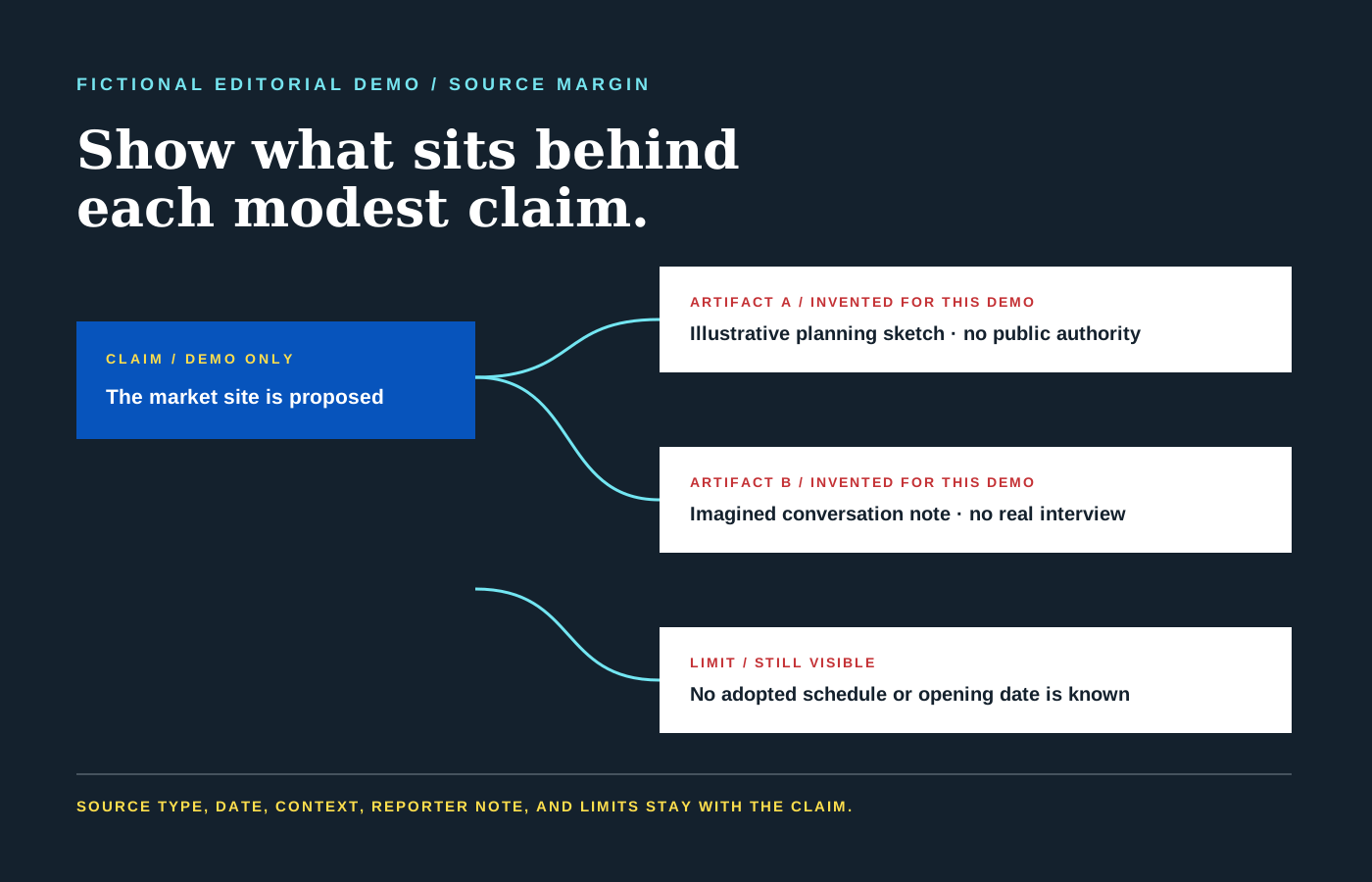
Real reporting can identify a source type, date, link or document, context, and reporter note. This demo uses no real records. Each example below is a fictional artifact made for this concept.

A
ILLUSTRATIVE PLANNING SKETCHDEMO ARTIFACT / CREATED FOR THIS DEMO

Supports: Shows one possible arrangement for the fictional square.

CONTEXT / LIMIT

Created for this concept. No issuer, date, public authority, approval, or real project.

DATE / FICTIONAL EDITORIAL SEQUENCE ONLY
B
IMAGINED CONVERSATION NOTEDEMO ARTIFACT / CREATED FOR THIS DEMO

Supports: Provides narrative context for the fictional idea.

CONTEXT / LIMIT

Not an interview, transcript, quotation, named source, or report of a real conversation.

DATE / FICTIONAL EDITORIAL SEQUENCE ONLY
C
DESK OBSERVATIONILLUSTRATIVE ONLY / CREATED FOR THIS DEMO

Supports: Helps explain what the story still needs to establish.

CONTEXT / LIMIT

No site visit or direct observation occurred. No real location is depicted.

DATE / FICTIONAL EDITORIAL SEQUENCE ONLY
ANONYMOUS SOURCE POLICY / OWNER SUPPLIED

No anonymous source is used here. A real publication should explain its actual standards for granting anonymity, assessing a source’s basis of knowledge, attribution, and corroboration without exposing a protected identity.

DOCUMENTS / FUTURE ARCHITECTUREIssuer · author · date · type · relevant section · link · context

Only real documents with an appropriate access and archive route belong in a live story.

DATA / FUTURE ARCHITECTUREPublisher · period · geography · method · definitions · limits

No statistics or dataset are invented for this fictional story.

04 / TWO CLOCKSEVENT ≠ PUBLICATION HISTORY

WHAT HAPPENED WHEN?

The event has a timeline.
The story has one too.

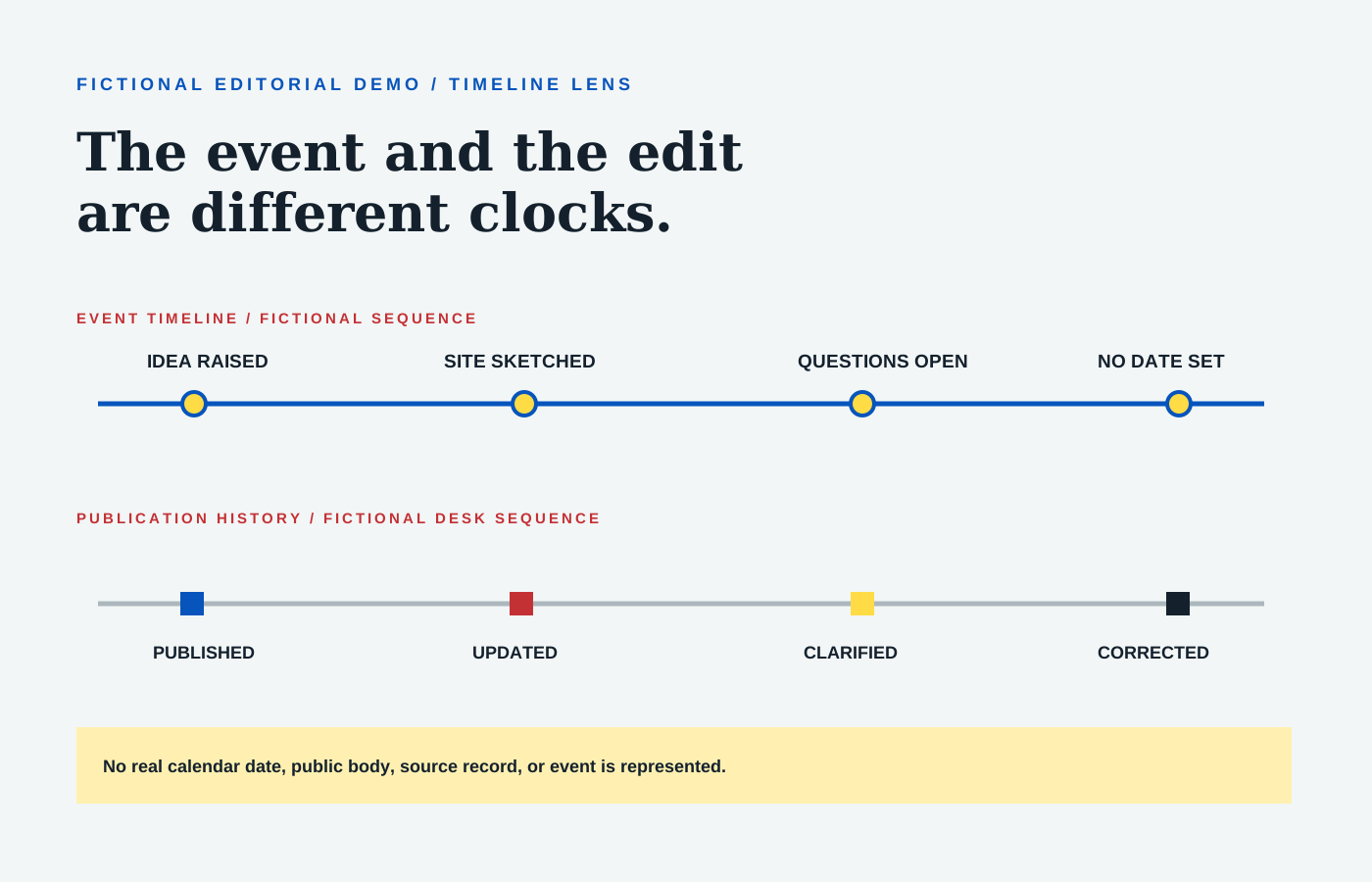
Both tracks are fictional. The first follows the imagined idea; the second records what the fictional desk changed in the published story.

EVENT TIMELINE / FICTIONAL SEQUENCE

An idea is raisedDEMO STORY / REPORTED
A square sketch is imaginedDEMO ARTIFACT / NOT OFFICIAL
Decision and timing remain openNOT YET CONFIRMED

PUBLICATION HISTORY / FICTIONAL DESK SEQUENCE

PUBLISHEDProposal described as an idea, not an approved move.
UPDATEDAdded the open questions about authority and timing.
CLARIFIEDLabeled the sketch as illustrative, not an official plan.
CORRECTEDFixed a harmless sample venue opening time: 09:00 → 10:00.
05 / STORY HISTORYNO SILENT REWRITE

WHAT CHANGED / WHY IT MATTERS

Keep the old line
next to the new one.

The fictional desk records meaningful edits instead of silently replacing the first version. This demo’s correction is harmless and stays attached to its earlier wording.

PUBLISHED / 08:10Old night market may move to a new public square.

Initial version. “May” marks the idea as unconfirmed.

UPDATED / 12:30Added the unanswered decision and timing questions.

Why: the story needed to distinguish an idea from an adopted plan.

CLARIFIED / 15:10The square sketch is labeled as an illustrative demo artifact.

Why: prevent a concept drawing from looking like an official record.

CORRECTED / 16:20 VISIBLE CORRECTIONWrong: 09:00 sample opening. Correct: 10:00 illustrative opening.

Why: the fictional desk transcribed its own demo note incorrectly. No real venue or schedule is represented.

RESPONSE STATUS / NOT APPLICABLE AS REAL REPORTING

No actual party was contacted and no response is invented. A live publisher should show requested, received, declined, or post-publication response status only when accurate.

UNCERTAINTY IS AN EDITORIAL STATE

What we don’t
know yet.

Unknown does not mean the reader should fill in a guess.

NOT YET CONFIRMEDHas anyone approved a move?
AWAITING EVIDENCEWhich record would establish a decision?
NO DATE SETWhen would any change happen?
RESPONSE / NONE IN DEMOWhat do affected market users say?
Fictional reporting map connecting a modest claim to invented demo artifacts and explicit limitations.
CLAIM / SOURCE / LIMIT · ALL MATERIAL FICTIONAL
Paired event and publication timelines without real-world dates or events.
EVENT CLOCK / EDITORIAL CLOCK · SEPARATE TRACKS
06 / HOW WE REPORTREAL POLICY / OWNER MUST SUPPLY

TRUST IS A PRACTICE, NOT A BADGE

Standards belong to
the actual publisher.

This concept does not invent an editorial code or claim independence. A real publication supplies its own policy and factual ownership, funding, leadership, commercial relationships, and newsroom contact routes.

ACCURACY & ATTRIBUTION

Owner supplies sourcing, verification, corrections, and right-of-response practices.

OPINION / NEWS / ANALYSIS

Use the publication’s real content labels. Separate reported facts from interpretation.

SPONSORSHIP & CONFLICTS

Label actual advertising, paid partnerships, ownership, funding, affiliate links, and relevant author disclosures.

AI & VISUAL STANDARDS

State the publisher’s real AI-use and image-alteration policy. No truth score or synthetic-media guarantee.

PRIVACY & SAFETY

Owner supplies standards for children, vulnerable people, privacy, complaints, tips, moderation, and appeals.

OWNERSHIP & FUNDING

Identify actual owners, leadership, funding sources, grants, advertising, and membership relationships.

CONTACT / SECURE TIPS / COMMENTS / READER SERVICE

Real general, correction, complaint, press, advertising, accessibility, subscription, and secure-tip routes must be supplied by the publisher. This demo has no file upload, anonymous drop, comment box, fake mailbox, or reader account.

07 / WHAT DO YOU STILL WANT TO KNOW?LOCAL PRESENTATION ONLY / NOT SENT

READER QUESTIONS, NOT COMMENTS

Choose the next
thing to inspect.

This local choice changes only the prompt on this page. It is not collected, saved, or sent to a newsroom.

Choose a question about the fictional story

A PUBLICATION WEBSITE / DIRECT CONTEXT

The headline gets attention.
The reporting earns the return.

A publication website can make original reporting easier to understand, verify, follow, and revisit. SIGNAL promises no reach, trust, subscriptions, or revenue results.

Plan a publication website
RETURN TO THE SAME HEADLINE

Old night market may move to a new public square

SOURCECONTEXTVERSION 04UNKNOWNNEXT QUESTION

You came for the headline. Come back for what changes.

Build a story worth returning to