01 / EMPLOYERI need people02 / CANDIDATEI need work
A SHARED SPACE FOR A MORE USEFUL FIRST CONVERSATIONTHE WEBSITE IS THE TABLE.
Put the real expectations between two people. Let a human introduction follow.
NO SCORE / NO MAGIC MATCH
01 / CHOOSE A CHAIRLOCAL CONCEPT INTERACTION
THE TABLE WITH TWO CHAIRS
What are you bringing to the conversation?
The doors arrive in the same room. Choose a side, place a few broad topics on the table, and see what could be clearer before anyone talks.
ONE TABLE
NOW AT THE TABLEEMPLOYER ROLE BRIEF0 topics placed · held in this page only
PUT IT ON THE TABLETHE CENTER IS STILL OPEN
SPACE FOR THE OTHER PERSON
Topics gather toward the center. They are not compared, ranked, or scored.
DOCUMENT 01 / EMPLOYERROLE BRIEF
Start with the work.
WHY NOW
Not set / ask the employer
WORK & NEEDS
Purpose and day-to-day work need owner detail
SUCCESS & PROCESS
Expectations and steps need owner detail
COMPENSATION
Owner must supply verified information
WORKING MODEL
Owner must supply the actual location, schedule, and arrangement
This demo does not create a vacancy or submit a hiring request.
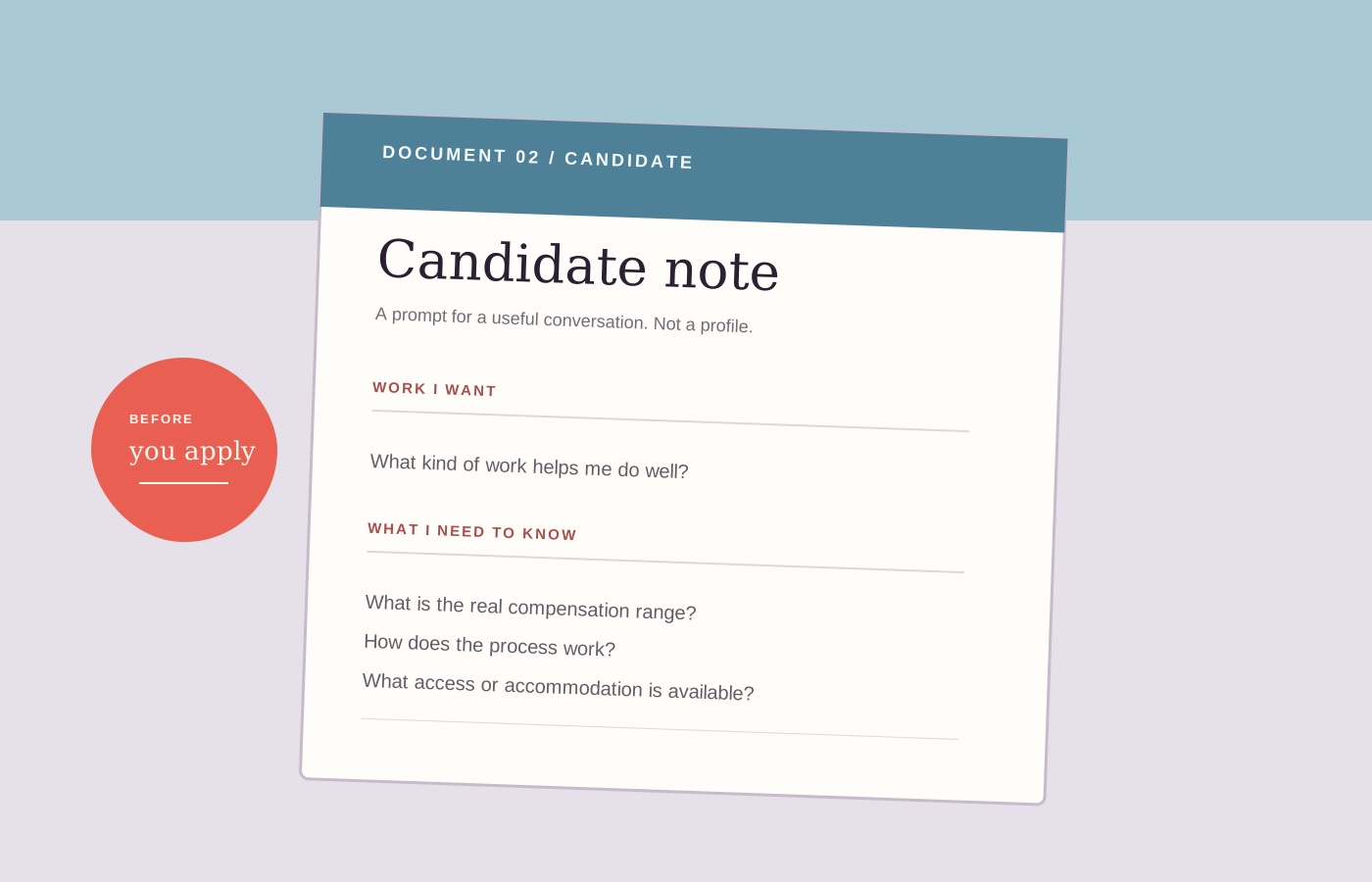
DOCUMENT 02 / CANDIDATECANDIDATE NOTE
Bring the right questions.
WORK INTEREST
What kind of work matters to me?
SKILLS & LEARNING
What is required, preferred, and learnable?
WORKING MODEL
What should I know before applying?
COMPENSATION
Ask for the real range, currency, and pay period
PROCESS & ACCESS
Ask about steps, timing, and available accommodations
This demo does not apply for a job or create a candidate profile.
Selections live only in this page’s memory. Nothing is saved, submitted, uploaded, or sent. Keep choices broad; do not enter personal or confidential details.
02 / AN EMPLOYER BRIEFDEFINE BEFORE SOURCING
THE EMPLOYER CHAIR
They’re not just asking for a job title.
A useful role brief makes room for why the role exists, the actual work, team context, location, schedule, working arrangement, employment type, and the expectations for the first months.
Separate day-one requirements from what can be learned. Keep credentials, licenses, languages, and other conditions only where relevant to the actual role and lawful employer criteria.
NEEDS ON DAY ONE
What must this work genuinely require?
Job-relevant skills, experience, credentials or licenses where truly needed. No generic list of twenty requirements for an entry-level role.
REQUIRED / VERIFIED BY EMPLOYERCAN BE LEARNED
Where could the person grow into the work?
Training, transferable skills, and learnable tools belong in a different column from essential day-one needs.
PREFERRED / CAN LEARN
COMPENSATION COMES BEFORE SOURCING.
Owner supplies the verified range, currency, pay period, and applicable benefits. This concept invents no salary or estimate.
03 / A CANDIDATE GUIDEINFORMED SELF-SELECTION
BEFORE YOU APPLY / EXAMPLE ARCHITECTURE
THE CANDIDATE CHAIR
Make room to decide if the conversation is worth having.
What the role actually involves and what is genuinely required
What can be learned after joining
Where and how the work happens, including schedule and travel
Real compensation, benefits, employment type, and application steps
Questions to prepare and how to request an interview accommodation
Accessible formats and accommodation routes belong before application. Ask only for information the real process needs. This concept never asks for diagnoses or medical history.
04 / THE MIDDLE OF THE TABLENO COMPATIBILITY VERDICT
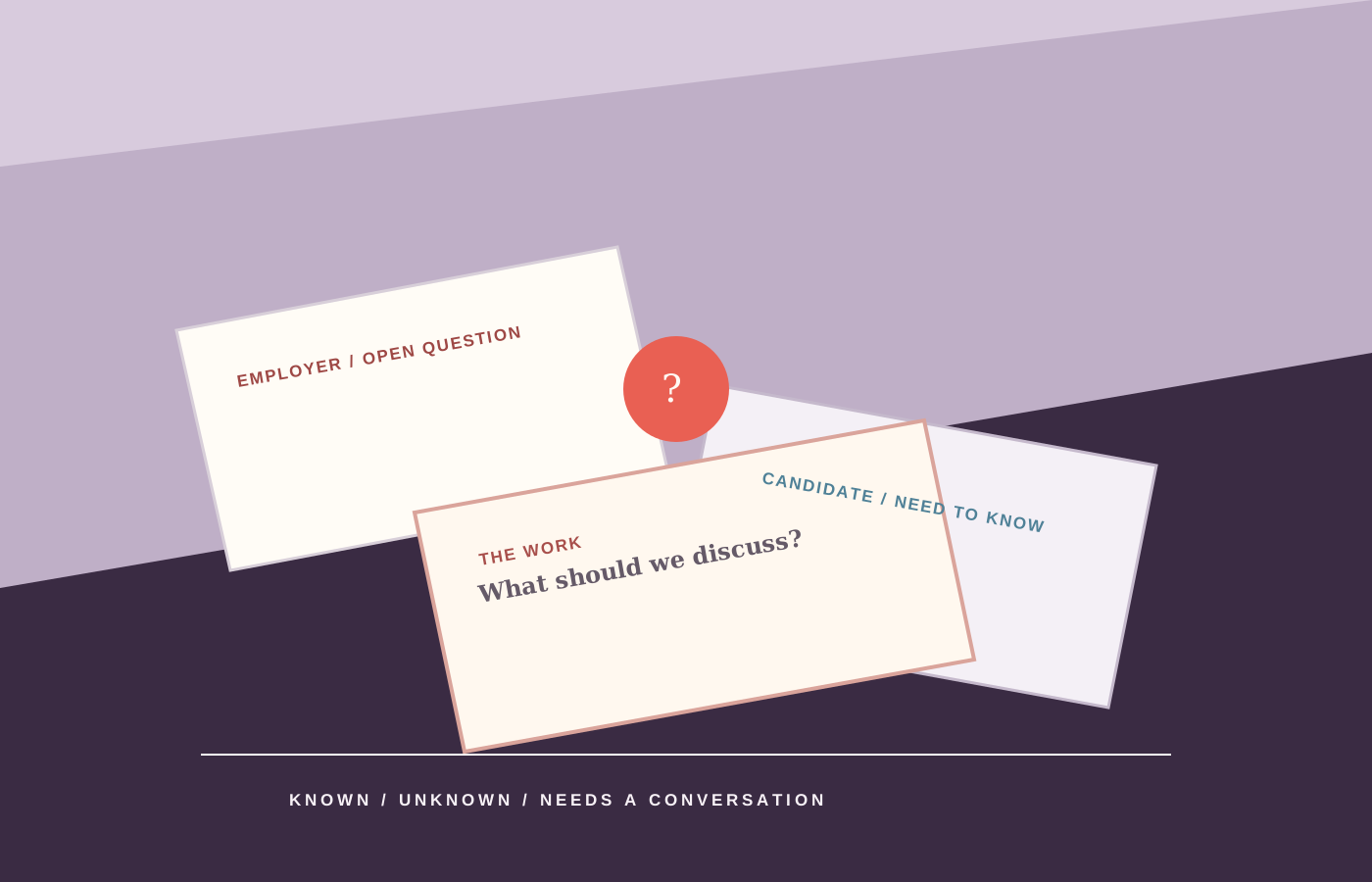
WHAT BOTH SIDES NEED TO DISCUSS
Known. Unknown. Worth asking about.
A comparison surface can help people notice open questions without claiming that one person fits another.
THE WORKNeeds detail
REQUIRED SKILLSNeeds detail
WHAT CAN BE LEARNEDNeeds detail
WORKING MODELNeeds detail
COMPENSATIONOwner must supply
PROCESSOwner must supply
NO MATCH SCORE / NO RANKING / NO AUTOMATED RECOMMENDATION
05 / THE HUMAN INTRODUCTIONREAL PROCESS, OWNER-SUPPLIED
A CLEAR PROCESS RESPECTS BOTH SIDES
A human can listen, clarify, explain, and introduce.
Show the real application, screen, interview, assessment, reference or background check, decision, offer, and onboarding steps only when those steps are part of the actual process.
FOR EMPLOYERS
What would help a recruiter source responsibly?
Define the need, must-haves, learnable skills, verified compensation, working model, interview evidence, and what success means after someone starts.
FOR CANDIDATES
What should be clear before applying?
Explain the work, employer where disclosure is permitted, location, pay details, process, assessments and their purpose, accommodation route, and how updates and closure work.
WHEN THE ANSWER IS NO
Silence is also an experience.
A real process should say when candidates will hear back and how decisions are communicated. Do not promise individual feedback unless the organization provides it.
No personality test, IQ test, automated ranking, fake assessment, fake interview, or simulated candidate status appears here.
TRUST IS MADE OF REAL DETAILS
The person on the other side deserves the facts.
A real recruitment site can identify its legal business, recruiters, specialisms, markets, employer and candidate processes, contact route, privacy and retention practices, accommodation options, fees where relevant, and verified credentials. It can explain who receives candidate data, why it is needed, how long it is kept, and how to ask about correction or deletion.
NO FAKE OPENINGSNo invented vacancies or job schema.Real role status: open / paused / closed / filled, using current owner-supplied facts.NO PERSONAL-DATA DEMONo name, contact, CV, identity, health, or history fields.No form, upload, persistence, or submission in this interaction.NO AI THEATERNo AI matching, resume scoring, or predicted performance.No data store, parser, ranking, or automated hiring recommendation.NO TRUST BADGES BY FICTIONNo fake profiles, clients, fees, testimonials, or credentials.Use only verified recruiter identity, business details, approved references, and real contact.
PUT EXPECTATIONS BETWEEN PEOPLE
ENOUGH CONTEXT TO TALK
Both sides know what is clear and what still needs a conversation.
That is the payoff. Not “match found.” Not “93% compatible.” A prepared beginning for two people to ask, listen, and clarify.
Better introductions start with better expectations. A recruitment website can help employers give better briefs and help candidates understand opportunities, without promising placements, speed, performance, retention, or salary outcomes.