THE SHAPE OF THE DAY
Duration, pace, distance, terrain, physical effort, stops, breaks, free time, and what may change.
EARLY MORNING · FIVE MINUTES BEFORE LEAVING
The guide is already there. The street is still waking up. You haven’t left yet—but the day has started to feel possible.
Begin before departureCampaign imagery is illustrative. No real tour, place, operator, or booking is represented.
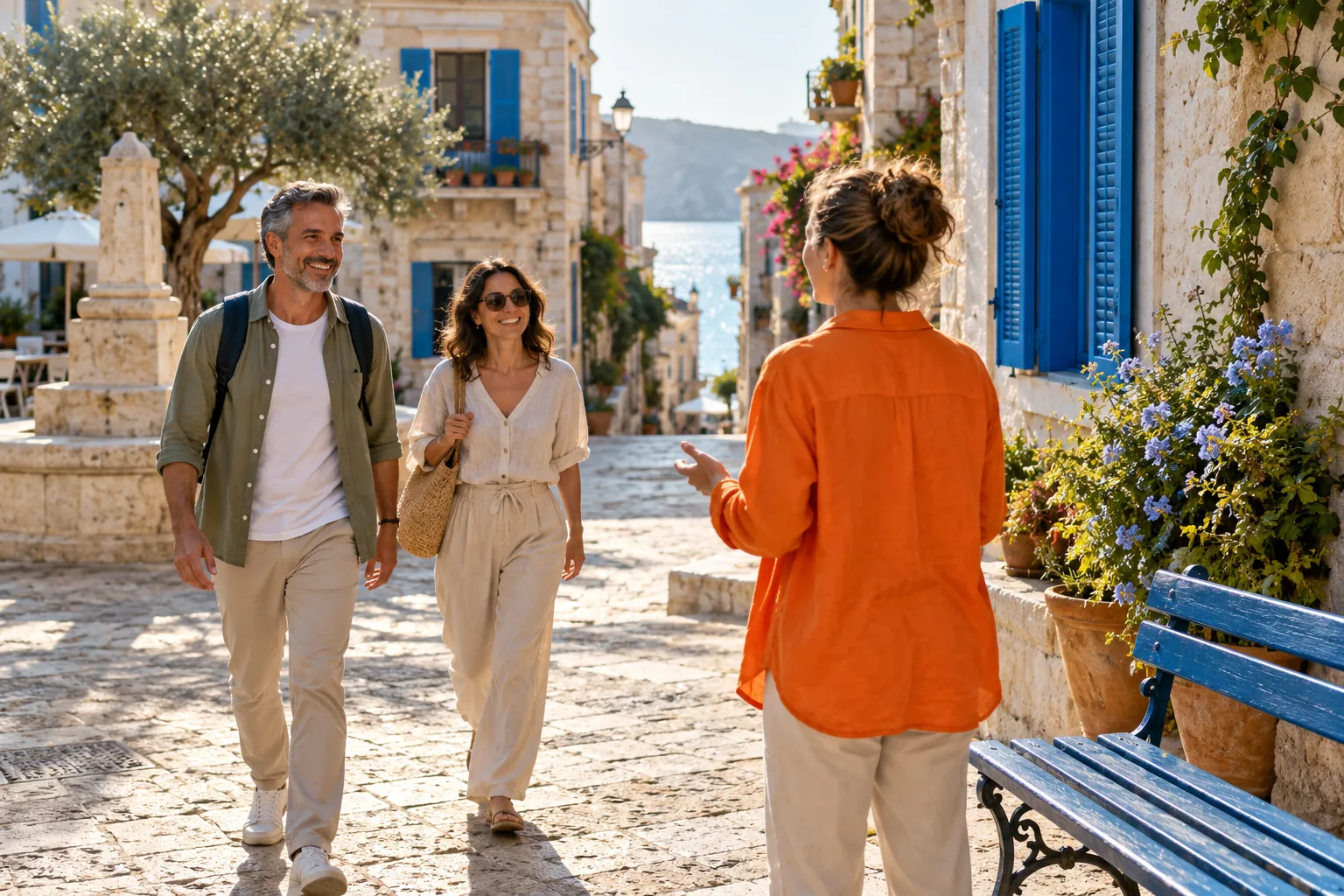
Move at your own pace. Each moment offers one sensory cue and one practical question that a real operator should answer.
A real page should show the meeting-point photo, landmark, arrival time, written directions, and who to look for.
This sequence is a narrative device, not a real route or scheduled experience. A real operator supplies every location, time, stop, and condition.
Before choosing a tour type, name what you hope the day will give you. This is a guide to possibilities, not a personality test.
Choose a feeling first. The activity language can follow.
Experience types might include a walk, food experience, day trip, guided hike, boat experience, cultural experience, workshop, private, small-group, or self-guided format. The operator defines what is actually offered.
Real schedules belong to the operator. Here, we show the kinds of information that can make movement, pauses, and changes understandable.
The place, landmark, arrival time, guide cue, and clear written directions.
The route, pace, terrain, travel between stops, and physical effort.
Breaks, food or drink, seating, free time, and bathroom availability.
The next stop, admission, access, and what visitors may see or do.
The actual end point, transport details, and what happens if the plan changes.
No times, stops, duration, transport, admission, meals, or route are claimed for this illustrative concept.
A clear meeting point prevents the day from starting with uncertainty. Show the actual place, then make the directions usable without a map.
No map pin, address, location name, pickup, schedule, or coordinates are invented in this demo.
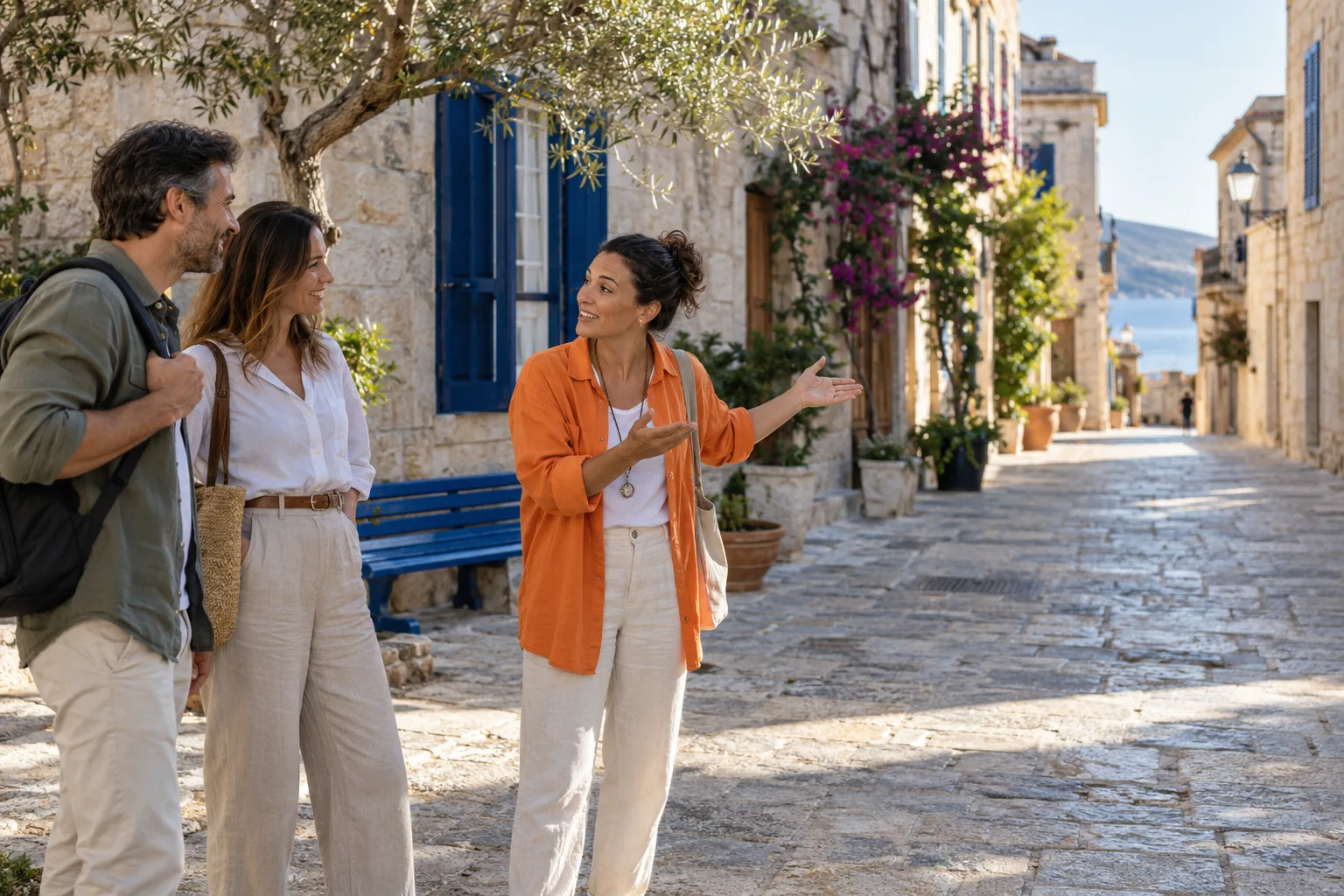
Use a genuine guide photo, supplied name, role, languages, relevant qualifications, specialty, and the right post-booking contact method. This portrait is campaign imagery—not an actual guide.
Strong experience pages make room for the questions that prevent a mismatch. Each answer must come from the operator.
Duration, pace, distance, terrain, physical effort, stops, breaks, free time, and what may change.
Exposure, rain plan, weather-dependent sections, alternative route, cancellation, rescheduling, and what to bring.
Steps, surfaces, walking distance, seating, toilets, transport, hearing/visual accommodations, sensory environment, and service-animal or companion policies.
Minimum age, child tickets, stroller/car-seat rules, guardians, skill or swimming requirements, and any height/weight limits that apply.
What is included, dietary choices, allergen information, cross-contact limits, and advance-notice requirements where relevant. No medical guarantee.
Actual risks, briefing, equipment, supervision, emergency process, physical requirements, and licenses or insurance only when evidenced.
Included movement, pickup zones and windows, excluded areas, meeting instructions, and accessible transport facts if offered.
Relevant clothing, footwear, water, sun/rain protection, ID, tickets, swimwear, medication, or equipment—only as applicable.
Help the right visitor choose, and give someone else permission to decide this experience is not for them.
Make inclusions, exclusions, mandatory charges, price, and booking conditions easy to find together.
Support real per-person, per-group, private, adult/child, seasonal, starting-price, quote, or free-experience terms where applicable. Never hide unavoidable costs or invent discounts.
Connect only to a real reservation or inquiry source. No sample calendar, availability, countdown, scarcity, or departure time is shown here.
Use the operator’s true next step: booking, availability check, private-tour request, question, call, message, or approved booking partner.
Set expectations before a visitor commits. A website can organize these answers without pretending to be the operator’s systems.
Cancellation window, refunds, operator/weather cancellation, minimum participants if applicable, rescheduling, late arrival, and no-show terms.
Whether the experience runs in rain, what changes, alternative routes, operator cancellation, rescheduling, and relevant clothing. No live forecast widget.
Owner-supplied risk information, briefing, equipment, supervision, emergency process, physical requirements, permits, and insurance evidence where relevant. No safety guarantee.
Architecture for confirmation, meeting reminder, directions, guide identification, preparation, schedule/weather updates, contact channel, and voucher instructions. No simulated message system.
Sort out what you want to ask. Your selections stay in this page’s memory and are not saved or sent.
No preference chosen yet · Not sure yet · Not sure yet pace · i'm still planning · not sure · Add any questions above
Future real experience pages can expose operator-supplied facts in crawlable semantic content. No ranking promise, booking integration badge, or speculative travel schema is added.
No fabricated TouristTrip, Product, Offer, rating, review, event, or LocalBusiness markup.
Use a genuine operator identity, accurate trip details, real guide, clear meeting instructions, specific accessibility and safety information, transparent policies, and approved real reviews only where available.
No traveler quote, rating, guest count, award, marketplace badge, license, insurance, or certification is claimed.
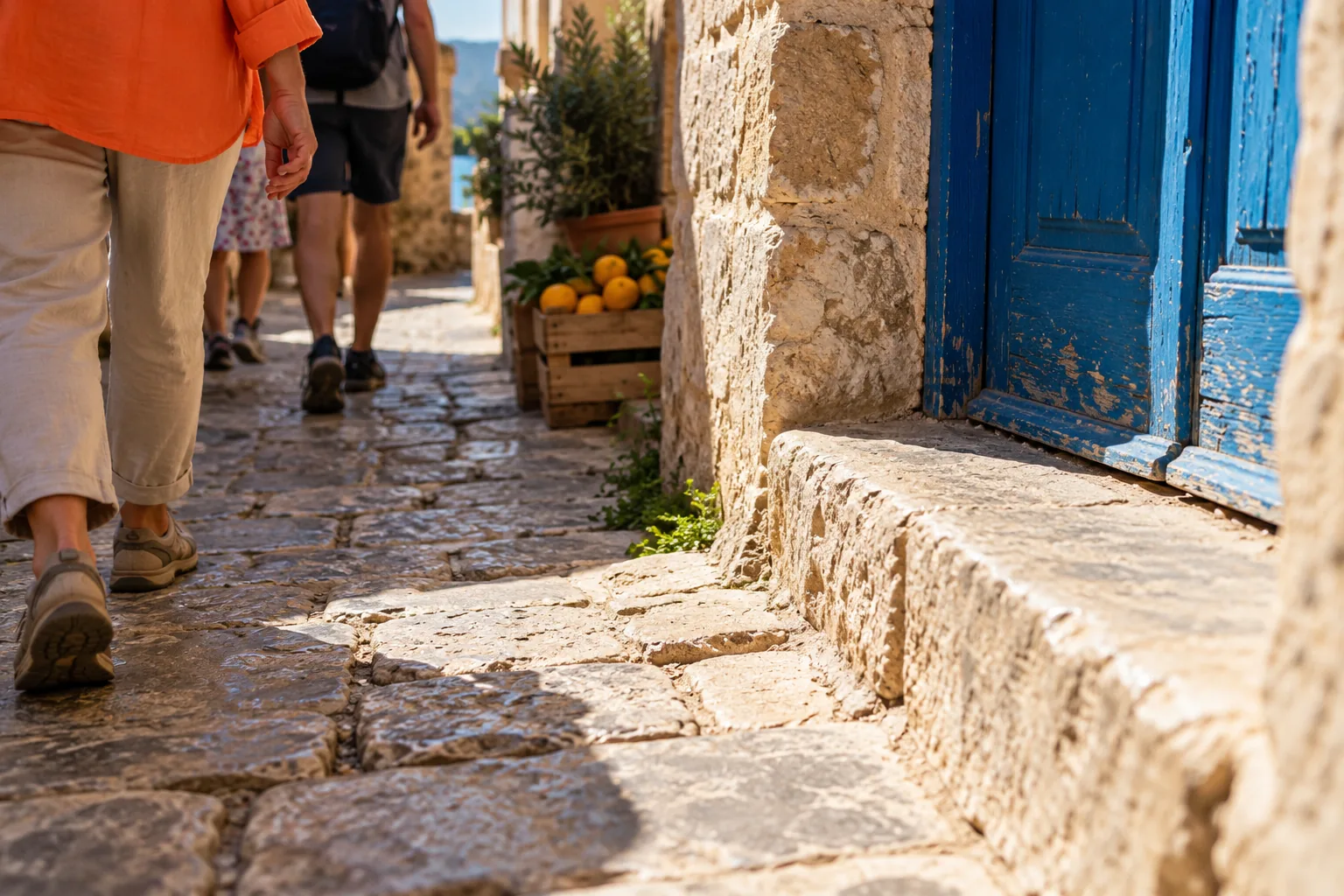
Inspiration opens the door. A visitor still needs to understand what happens, who it suits, how to meet, what to bring, what’s included, and what to ask before they choose a real booking route.
Get to the practical detailsInspiration makes someone want to go. Clarity helps them understand how they actually could.
VisionRelay project request · no purchase or booking is made from this illustrative concept.